Family Meals and Their Natural Influence
Published January 2026
Food Is a Social Practice
Eating is never purely biological. It's embedded in family structures, cultural traditions, social gatherings, and emotional contexts. The food we eat and how we eat it are shaped by the people around us and the traditions we inherit or adopt.
Family meals, holiday gatherings, everyday dinners together—these moments shape food preferences, portion sizes, cooking skills, and attitudes towards eating long before anyone consciously thinks about nutrition.
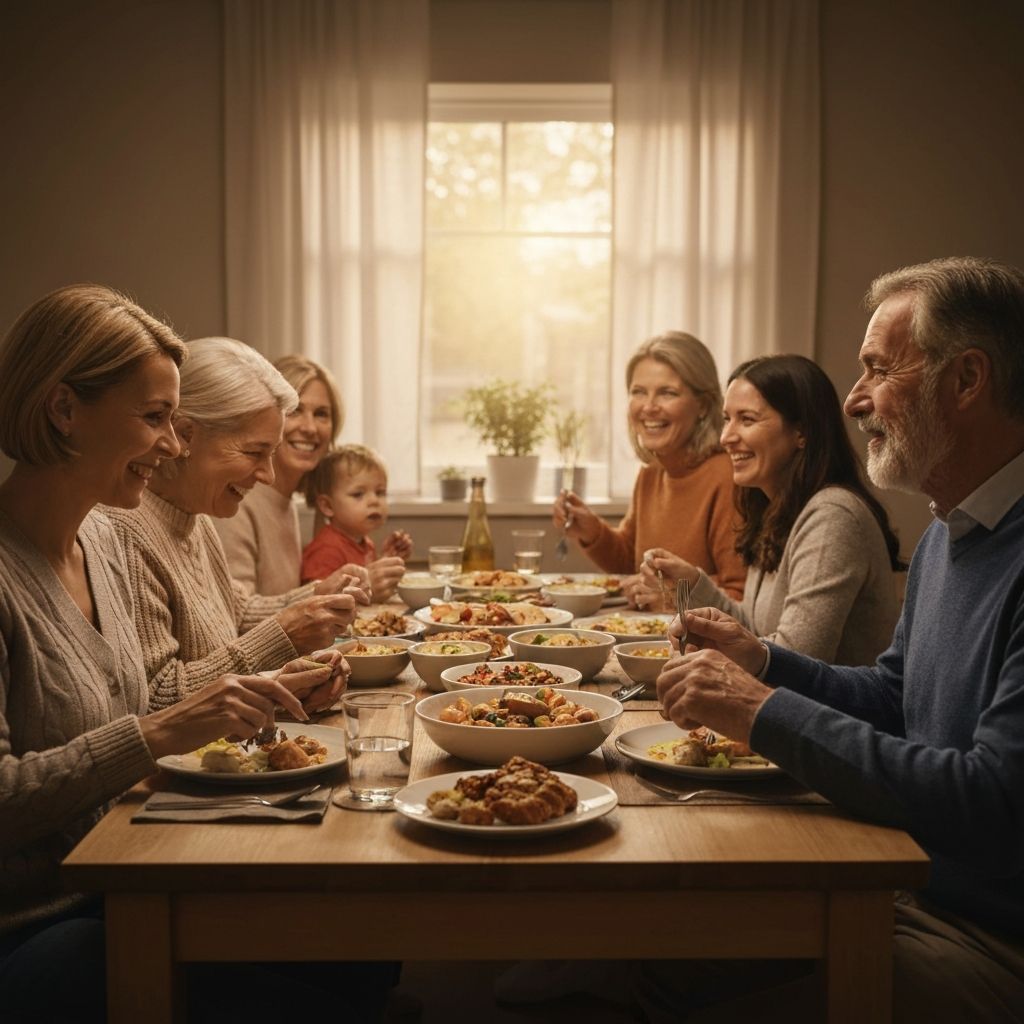
How Family Traditions Shape Eating
Families develop eating patterns and food preferences across generations. A traditional Sunday roast, a favourite childhood dessert, a specific way of cooking vegetables—these become normal and expected through repeated experience.
These traditions carry emotional weight. Food associated with family gatherings or cherished memories becomes more than fuel; it becomes connection and belonging.
Children Learn by Observation
Children develop eating habits primarily through observation and participation, not instruction. They learn what foods are available, how meals are structured, which foods are treated as special or everyday, and how family members talk about and relate to food.
These learned patterns often persist into adulthood, even when circumstances change. Understanding this helps explain why eating habits are deeply rooted and difficult to change, even when someone intellectually understands different information.
Cultural and Ethnic Heritage
Food is one of the strongest carriers of cultural identity. Traditional dishes, specific ingredients, preparation methods, and meal structures connect people to their heritage and community. These foods often have deep cultural, spiritual, or historical significance beyond nutrition.
Family meals featuring culturally significant foods reinforce identity and connection. These meals are rarely about optimisation—they're about belonging and cultural continuity.

Social Eating and Gatherings
Social situations often prioritise connection over other considerations. A birthday cake at a workplace celebration, pizza with friends, a family feast—these aren't about hunger or optimisation. They're about participation, celebration, and belonging.
This is completely normal and healthy. Food's social functions are as important as its biological functions.
Influence on Food Preferences
Family exposure influences which foods people prefer, enjoy, and are comfortable eating. Someone raised with a wide variety of foods is likely comfortable with diversity. Someone raised with limited variety might find unfamiliar foods uncomfortable or unappetising, even if they're biologically similar to familiar foods.
These preferences aren't irrational—they're learned through experience and carry emotional associations.
Modern Family Eating Contexts
Contemporary families experience varying food contexts: busy schedules, diverse family members with different preferences, multiple food sources (home-cooked, takeaway, ready-made), and cultural mixing. Yet family eating still fundamentally shapes individual eating patterns.
Family meals might look different now—takeaway around a table rather than a cooked meal—but their function in creating connection and normalising eating patterns remains.